 Skip-the-line available
 What to See at the Château Royal d'Amboise
The royal apartments, the Saint-Hubert chapel and the Leonardo burial tradition, and the ramparts and gardens above the Loire.
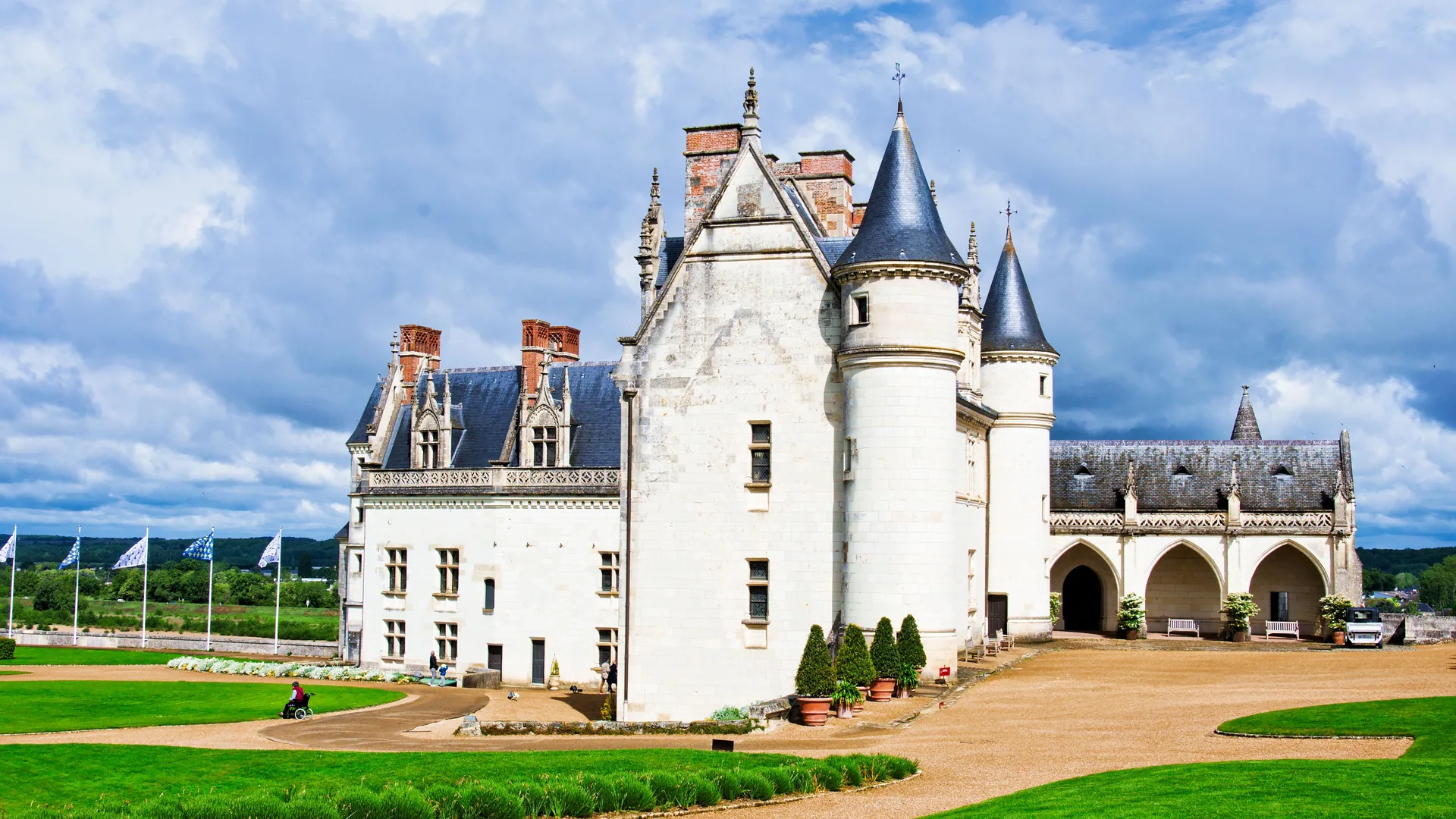
A visit to the Château Royal d'Amboise moves through three distinct experiences on one compact hilltop: the furnished royal apartments where the French court lived and worked, the small but atmospheric Saint-Hubert chapel tied to the Leonardo da Vinci burial tradition, and the open-air ramparts and terrace, where the real draw is simply the view down the Loire that explains why the kings chose this spot in the first place. Here's what each part actually holds.
The royal apartments (Logis royal)
The Logis royal is the furnished heart of the visit — a sequence of rooms built and rebuilt across the late Gothic and early Renaissance periods, reflecting the château's role as a working royal residence rather than a museum piece from a single era. The rooms show the transition in French royal taste that Charles VIII and François I both drove: later spaces show the early influence of the Italian Renaissance styles the French court encountered through Charles VIII's Italian campaigns of the 1490s, a transition that would go on to define French Renaissance architecture for the next century.
Because a significant portion of the original palace was demolished in the 19th century, the apartments you walk through today are a genuine but partial survival — some furnishing and decoration is restored or reconstructed rather than fully original. This is exactly what the included HistoPad tablet is designed to address: pointed at key rooms, it overlays a digital reconstruction of how the space looked at the height of the court, including wings and rooms that no longer physically exist.
The Saint-Hubert chapel and the Leonardo burial tradition
A short walk from the royal apartments, the small Flamboyant Gothic Saint-Hubert chapel is one of the most visited single points in the château, largely because of its association with Leonardo da Vinci, who died at nearby Clos Lucé in May 1519 and spent his final years working for François I. The chapel's history is more layered than the simple version often repeated to visitors, and it's worth understanding honestly: Leonardo was originally buried not in Saint-Hubert but in the château's separate Chapel of Saint-Florentin, which stood elsewhere on the grounds and was demolished around the turn of the 19th century, well after the Revolution had already stripped much of the château of its royal role.
During a 19th-century excavation of the former Saint-Florentin site, bones were recovered and later reinterred in the Saint-Hubert chapel under a marker bearing Leonardo's name — but contemporary accounts of that original excavation are inconsistent, with some describing an intact skeleton and others describing a more fragmentary and disturbed find. There is no way to establish with certainty, by modern standards, that the remains now marked in Saint-Hubert are definitively his. Visitors are welcome to treat the chapel as the traditional and symbolic site of Leonardo's burial — which is exactly how it is presented on-site — while understanding that the identification rests on 19th-century tradition rather than modern forensic proof.
The ramparts, terrace and gardens
The open-air part of the visit is, for many visitors, the most memorable — the fortified ramparts and terrace wrap around the hilltop and deliver a genuinely striking, uninterrupted view down the Loire river and across the rooftops of Amboise town below. It's the same view, essentially, that explains the site's original strategic and later royal appeal: a naturally defensible spur commanding the river crossing, later chosen for exactly that visibility and prestige by the French crown.
Part of the château's gardens is currently fenced off for ongoing rampart restoration work, which means the accessible garden area is smaller than in past years. This doesn't diminish the core of the outdoor visit — the ramparts walk and the terrace viewpoints remain fully open and are, in most visitors' experience, the highlight of the trip regardless of the garden closure. Allow time to simply stand at the terrace edge; it's one of the best free views in the Loire Valley, included in every ticket.
Frequently asked
What's the highlight of a visit to Amboise?
Most visitors point to two things: the Saint-Hubert chapel with its Leonardo da Vinci burial tradition, and the ramparts/terrace view down the Loire. The royal apartments, brought to life with the included HistoPad, round out the visit.
Is Leonardo da Vinci definitely buried in the Saint-Hubert chapel?
It's presented as his traditional and symbolic burial site, and that's a fair way to think of it. He was first buried in a different, now-demolished chapel on the grounds; bones later recovered from that site were reinterred in Saint-Hubert in the 19th century, but the historical record doesn't allow certain identification.
Are the château gardens fully open?
Part of the gardens is currently fenced for ongoing rampart restoration work. The royal apartments, the Saint-Hubert chapel and the ramparts/terrace views remain open and are the heart of the visit.
How long does it take to see everything?
Around 1.5 hours covers the royal apartments, the chapel and a walk along the ramparts and terrace at an unhurried pace.
What does the HistoPad actually do?
It's a tablet, included free with every ticket in 12 languages, that uses augmented reality to reconstruct rooms and wings of the château as they looked during the Renaissance — including sections that no longer physically survive.