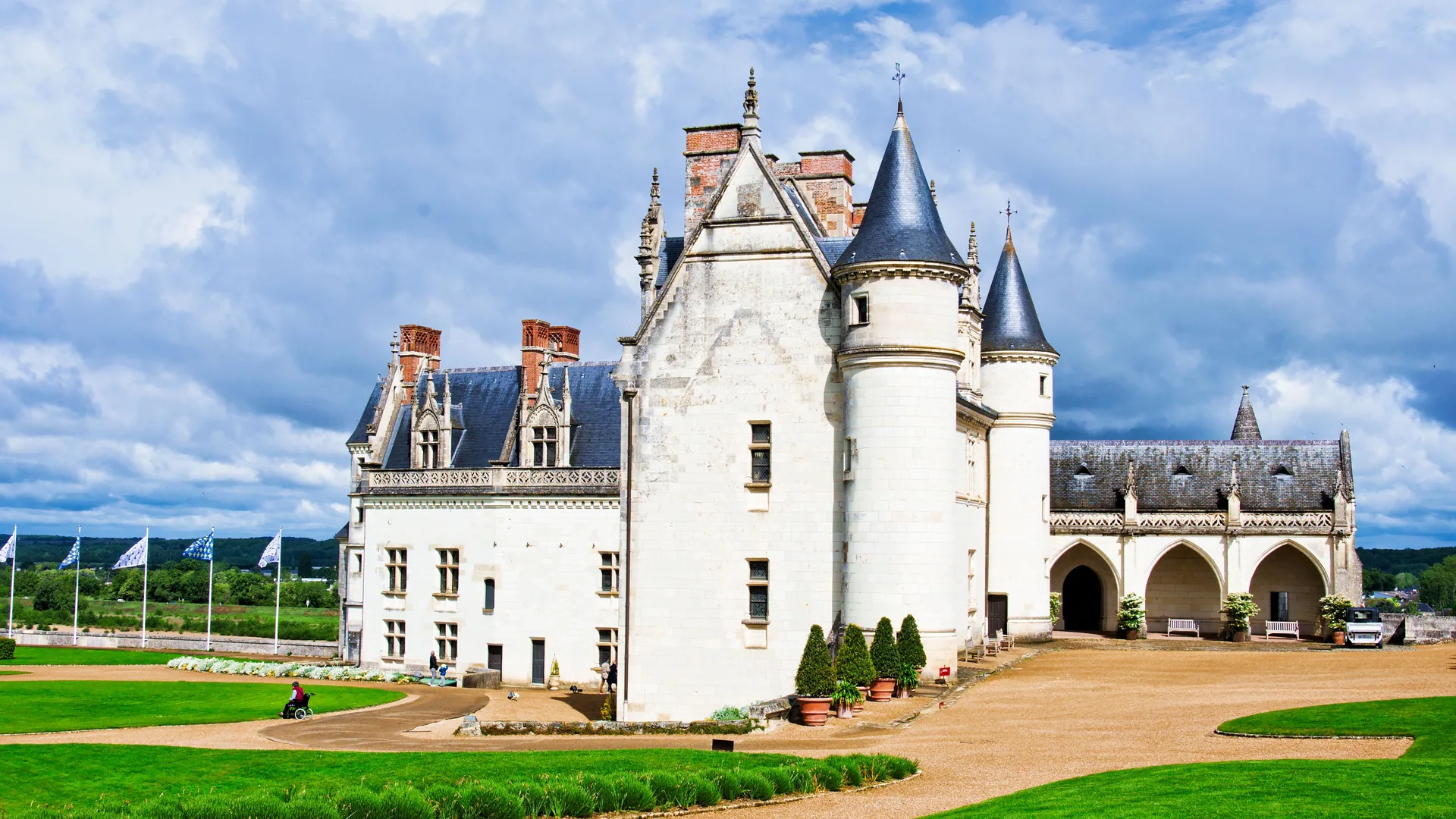
 Skip-the-line available
 Visiting the Château Royal d'Amboise and Clos Lucé in One Day
How the royal château and Leonardo da Vinci's last home fit together — the underground-passage connection, timing and a sensible order.
The Château Royal d'Amboise and the Clos Lucé manor house, where Leonardo da Vinci spent his final years, sit close enough together that pairing them in a single day is not just possible but genuinely the natural way to see both — the two are linked by a shared story and, according to long-standing local tradition, once by an actual underground passage. This guide covers how the sites relate to each other, how to sequence a visit, and what to expect timing-wise, without duplicating either site's own ticket details.
How the two sites connect
François I invited Leonardo da Vinci to France in 1516 and installed him at Clos Lucé, a manor house a short walk from the château, so the aging artist and engineer could work for the crown while living independently. Tradition holds that François had an underground passage built connecting the two properties, so he could visit Leonardo informally and without ceremony — a detail that speaks to the genuine personal closeness between the young king and the elderly polymath in Leonardo's last years. A short stretch of that passage is shown to visitors at the Clos Lucé end today.
Leonardo died at Clos Lucé in May 1519, reportedly with François I present, and was first buried within the Château Royal d'Amboise's grounds — the beginning of the burial-location story that continues at the château's Saint-Hubert chapel today. That shared narrative, split across two physical sites a few minutes' walk apart, is exactly why most visitors choose to see both on the same day rather than picking one.
How to sequence the visit
There's no strict correct order, but a common and sensible approach is to visit the château first — its royal apartments and the Saint-Hubert chapel set up the historical context of the French court and the Leonardo burial tradition — and then walk to Clos Lucé afterward to see where Leonardo actually lived, worked and died. Reversing the order works just as well if Clos Lucé's opening hours suit your morning better; the two sites are close enough that either sequence keeps the walk between them short.
Because the château's adult ticket is open-dated with no time slot to book, you have flexibility to fit it around whatever schedule Clos Lucé's own booking system requires — we'd suggest checking Clos Lucé's current hours and any timed-entry requirements directly with that site, since its ticketing and pricing are entirely separate from ours and we don't sell or quote on its behalf.
How much time to allow
Budget around 1.5 hours for the Château Royal d'Amboise — enough for the royal apartments, the Saint-Hubert chapel and an unhurried walk along the ramparts and terrace. Clos Lucé, with its house, gardens and large collection of Leonardo's mechanical models, typically takes a comparable or slightly longer visit given the size of its grounds. Combined, most visitors find a full day — roughly four to five hours across both sites including the walk between them and a lunch break in Amboise town — comfortable without feeling rushed.
If your schedule is tighter, the château alone is the better choice for visitors most interested in French royal history and the river views, while Clos Lucé is the stronger single choice for visitors primarily drawn by Leonardo da Vinci's engineering work and inventions. Most first-time Loire Valley visitors, though, report the pairing is worth the extra time — the two sites genuinely complete each other's story.
Frequently asked
Can I visit both Amboise château and Clos Lucé in one day?
Yes, comfortably. Allow roughly four to five hours combined, including the short walk between them and a lunch break in Amboise town.
Was there really a tunnel between the two sites?
Long-standing local tradition says yes — François I is said to have had an underground passage built so he could visit Leonardo informally. A short stretch is shown to visitors at the Clos Lucé end today.
Which should I visit first, the château or Clos Lucé?
Either order works well given how close they are. Visiting the château first gives useful historical context before seeing where Leonardo actually lived and worked at Clos Lucé, but reversing the order is equally valid.
Do you sell tickets to Clos Lucé?
No — we sell tickets only to the Château Royal d'Amboise. Clos Lucé has its own separate operator, pricing and booking system; check its current details directly with that site.
Is the walk between the two sites easy?
Yes, it's a short walk through Amboise town between the château and Clos Lucé, easily manageable on foot as part of a single day's visit.